

Marangu Route
The Marangu Route, often called the "Coca-Cola Route," is the oldest and one of the most popular routes on Mount Kilimanjaro. It earned its nickname because it is considered one of the easier routes due to its relatively gentle slopes and because it is the only route that offers dormitory-style sleeping huts instead of tents. As a result, it is often referred to as the tourist or beginner route.
Although the Marangu Route is considered less physically demanding than some of the other routes, it has a lower summit success rate on the standard 5-day itinerary, typically ranging from 27% to 50%. This is largely because the shorter schedule provides less time for hikers to acclimatize to the increasing altitude. Choosing the 6-day itinerary significantly improves the odds of reaching the summit, with success rates generally ranging from 60% to 80%.
Proper preparation can greatly enhance your experience and increase your chances of success. Training for hikes of 5–7 miles that include sustained uphill climbing, especially at higher elevations when possible, will help build endurance. Adding an extra acclimatization day and investing in high-quality hiking gear can also make a significant difference. Throughout the climb, experienced mountain guides provide valuable support, encouragement, and expertise, helping trekkers safely reach the summit.
The Marangu Route is also the shortest route on Kilimanjaro, with both the ascent and descent following the same trail. The complete trek covers approximately 45 miles (72 km) and involves about 13,200–13,240 feet (4,025–4,035 m) of elevation gain. The journey begins at Marangu Gate, which sits at an elevation of approximately 6,100–6,135 feet (1,860–1,870 m), and culminates at Uhuru Peak, the highest point in Africa, at 19,341 feet (5,895 m).



5 Day Marangu Route
Estimate
$1500
Day 1: Arrival and Pre-Climb Briefing Day
Today has no planned activities, except to arrive at your lodge in time for a pre-climb briefing with your mountain guide.
Day 2: Moshi Town to Marangu Gate to Mandara Hut
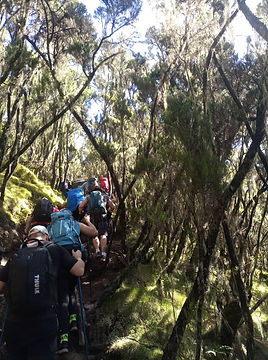
You will depart Moshi at approximately 9:00 a.m. for the drive to Marangu Gate, a journey of about 1–2 hours. After completing the required registration at the park entrance, you will begin your trek with your guide through the lush rainforest zone of Mount Kilimanjaro.
As you make your way toward Mandara Hut, keep your eyes open for the diverse wildlife that inhabits the forest. Possible sightings include colobus monkeys, blue monkeys, sunbirds, flycatchers, barbets, and woodpeckers. The rainforest environment offers a beautiful introduction to the changing ecosystems you will experience throughout the climb.
Upon reaching Mandara Hut, take time to rest and settle in before making the short trek to the rim of Maundi Crater. From this viewpoint, you can enjoy spectacular views of Mawenzi Peak and the surrounding landscape. After taking in the scenery, return to Mandara Hut for the evening.
Elevation: 6,100 ft (1,860 m) to 9,105 ft (2,775 m)
Hiking Distance: 4.5 miles (7 km)
Hiking Time: 3–5 hours
Habitat: Humid rainforest
Suggested Gear:
-
Sun protection, including sunscreen and sunglasses
-
Insect repellent
-
Moisture-wicking short- or long-sleeve base layers
Day 3: Mandara Hut to Horombo Hut
Today's trek is a longer and more scenic section of the route, taking you beyond the rainforest and into Kilimanjaro’s heath and moorland zone. As the forest begins to thin, the landscape opens up and the journey starts to feel more like a true mountain expedition, with the impressive peaks of Kibo and Mawenzi rising dramatically in the distance.
Although you have left the rainforest behind, you may still encounter various bird species along the trail. Keep an eye out for the remarkable giant Kilimanjaro groundsels, a unique high-altitude plant found within the park and one of the mountain’s most distinctive features.
As you continue gaining elevation, temperatures will become cooler, so dressing in adaptable layers will help you remain comfortable throughout the day.
Elevation: 9,105 ft (2,775 m) to 12,140 ft (3,700 m)
Hiking Distance: 7 miles (11 km)
Hiking Time: 5–6 hours
Habitat: Transition from rainforest to heath and moorland zone
Suggested Gear:
-
Layered clothing suitable for warm, humid conditions and cooler mountain temperatures
-
Sun protection, including sunscreen, sunglasses, and a hat
Day 4: Horombo Hut to Kibo Hut
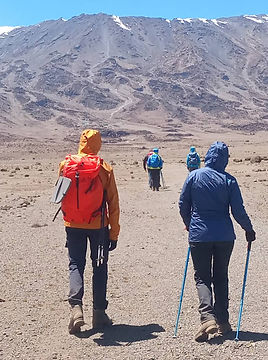
Today's trek takes you steadily toward the Kibo cone as you ascend through Kilimanjaro's dramatic alpine desert. Leaving the heath and moorland behind, the landscape changes significantly, becoming more barren and rugged as vegetation gradually disappears.
The trail crosses the vast Saddle, the high-altitude plateau between Kibo and Mawenzi Peaks. This unique landscape is often described as otherworldly, with a wide, open expanse of volcanic terrain stretching toward the summit.
You will arrive at Kibo Hut with enough time to rest, prepare your gear, and recover before beginning your summit attempt later that night. A good night's preparation and conserving your energy are essential for the challenging ascent ahead.
Elevation: 12,140 ft (3,700 m) to 15,430 ft (4,703 m)
Hiking Distance: 7.5 miles (12 km)
Hiking Time: 5–7 hours
Habitat: Vegetation-free alpine desert plateau
Suggested Gear & Conditions:
-
Collect your final water supply at the last available water point before the summit push
-
Electrolyte supplements to support hydration
-
Prepare for significant temperature changes
-
Bring wet wipes for personal hygiene, as facilities become more limited
-
Pack extra warm layers for the summit attempt
Day 5: Kibo Hut to Gilman's Point to Uhuru Peak to Horombo Hut
Around midnight, you will begin the final and most challenging ascent to Uhuru Peak, traveling through Kilimanjaro’s arctic zone under the stars. This section of the climb is a steep and demanding trek over loose volcanic scree in dark, cold conditions. A slow, steady pace is essential as you make your way upward.
Your guide will lead you in a zigzag pattern across the slope toward Gilman's Point (5,681 m / 18,640 ft), your first major milestone on the Kibo Crater Rim. From here, a shorter but still challenging section of trail remains as you continue along the rim toward Stella Point (5,739 m / 18,829 ft), a common arrival point for climbers approaching from the southern routes.
From Stella Point, continue along the crater rim to Uhuru Peak (5,895 m / 19,341 ft), the highest point in Africa and one of the world’s Seven Summits. Due to the extreme altitude, your time at the summit will be limited, but the sunrise, views, and sense of accomplishment will create memories that last a lifetime.
After celebrating your achievement, begin the descent back to Kibo Hut for breakfast or brunch. Once you have rested, packed your gear, and recovered, continue descending through the alpine desert and into the heath and moorland zones, where you will spend the night.
Elevation: 15,430 ft (4,703 m) to 19,341 ft (5,895 m)
Hiking Distance: Approximately 13 miles (21 km)
Hiking Time: 14–18 hours
Habitat: Arctic zone, steep volcanic terrain, and loose scree
Suggested Gear & Conditions:
-
Extreme cold-weather clothing and insulated layers
-
Hydration system and electrolyte support
-
Trekking poles for stability on loose terrain
-
Personal first-aid supplies
-
Sun protection, including sunscreen and sunglasses
-
High-energy snacks for the long summit day
Day 6: Horombo Hut to Marangu Gate to Moshi Town
Your final day on Mount Kilimanjaro begins with a long descent through the southeastern rainforest zone as you make your way toward Marangu Gate. The trail takes you through changing ecosystems, beginning in the heath and moorland zone before returning to the lush tropical rainforest.
Upon arrival at Marangu Gate, your vehicle will be waiting to transport you back to Moshi Town and your accommodation, where you can relax and celebrate your accomplishment.
The Marangu Gate is also the traditional place to thank your mountain crew for their dedication and support throughout your climb. A tip for your guides and porters is a meaningful way to show your appreciation for their hard work. At this time, successful climbers will also receive their Certificate of Achievement recognizing their Kilimanjaro summit accomplishment.
Driving Time: Approximately 1 hour
Elevation: 12,220 ft (3,700 m) to 6,100 ft (1,860 m)
Hiking Distance: 10.5 miles (17 km)
Hiking Time: 5–7 hours
Habitat: Heath and moorland transitioning through montane rainforest to tropical rainforest
Suggested Gear & Conditions:
-
Layered clothing for changing temperatures
-
Rain gear for the rainforest environment
-
Sun protection
-
Cash for guide and porter gratuities
Day 7: Departure
Enjoy a leisurely morning at your hotel and take time to relax after your Kilimanjaro adventure. At the scheduled time, you will be transferred to the airport for your onward flight or continue on to other adventures.
We wish you a safe journey home and hope to welcome you back for another adventure in the future.


6 Day Marangu Route
Estimate
$1800
Additional Acclimatization Day: Horombo Hut
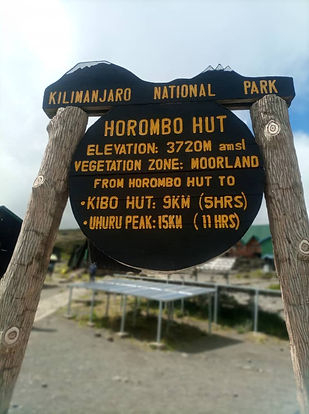
The itinerary remains the same, with the addition of an extra day at Horombo Hut (12,200 ft / 3,720 m) to allow for better acclimatization before continuing toward the summit.
This extra day serves as a training and acclimatization day, giving your body more time to adjust to the altitude while allowing you to become familiar with the mountain environment. You will take a guided hike around the Mawenzi Peak area, gaining valuable experience with the terrain, elevation, and changing weather conditions you may encounter during the summit attempt.
The additional time at altitude helps improve your chances of a successful summit while allowing you to rest, recover, and prepare mentally and physically for the days ahead.
This schedule is exactly the same, except you will stay an extra night at the Horombo Hut.
Day 1: Arrival and Pre-Climb Briefing Day
Day 2: Moshi Town to Marangu Gate to Mandara Hut
Day 3: Mandara Hut to Horombo Hut
Day 4: Acclimization Day at Horombo Hut
Today is dedicated to acclimatization and recovery as you continue preparing for the higher elevations ahead on your Mount Kilimanjaro trek. After breakfast at Horombo Hut, you'll set out on an acclimatization hike toward Kibo Hut, gaining valuable altitude exposure before returning to camp.
The hike takes you higher into Kilimanjaro's alpine environment, reaching an elevation of approximately 4,500 m (14,763 ft) before descending back to Horombo Hut (3,720 m / 12,204 ft). This gradual exposure to higher altitude is an important part of the acclimatization process and follows the proven "climb high, sleep low" approach.
After returning to camp, you'll enjoy lunch and have the afternoon free to relax and recover. Take the opportunity to explore the surrounding area, photograph the spectacular views of Mawenzi Volcano, read, rest, or simply enjoy the peaceful atmosphere of one of Kilimanjaro's most scenic camps.
Spending another night at Horombo Hut allows your body additional time to adapt before continuing toward Kibo Hut and the final summit preparation. Proper acclimatization is one of the most important factors in increasing your comfort, safety, and chances of reaching Uhuru Peak, the highest point on Mount Kilimanjaro.
Enjoy this quieter day on the mountain, recharge your energy, and prepare for the exciting stages ahead.
-
Starting Elevation: Horombo Hut — 3,720 m (12,204 ft)
-
Highest Point Reached: 4,500 m (14,763 ft) en route to Kibo Hut
-
Elevation Gain: Approximately 780 m (2,559 ft)
-
Distance: 5–8 km (3.1–4.9 miles)
-
Hiking Time: Approximately 3–5 hours
-
Habitat: Alpine desert and high-altitude terrain
-
Tips for Success
-
Take advantage of this acclimatization day to help your body adjust to higher elevations.
-
Walk slowly and maintain a comfortable pace during the altitude hike.
-
Drink plenty of water and continue eating well to maintain energy.
-
Use your free afternoon to rest—recovery is essential for summit preparation.
-
Enjoy the views of Mawenzi Volcano and the surrounding Kilimanjaro landscape.
Day 5: Horombo Hut to Kibo Hut
Day 6: Kibo Hut to Gilman's Point to Uhuru Peak to Horombo Hut
Day 7: Horombo Hut to Marangu Gate to Moshi Town
Day 8: Departure